


Earlier this year, we announced the launch of AudienceGPT™, an AI-powered tool that helps marketers identify and activate audiences based on real-time consumer journeys, with no first-party data, seed lists, or static segments required.
Powered by the same deep learning engine behind our chat-based contextual targeting tool, ContextGPT™, AudienceGPT changes the fundamental nature of audience building. It allows advertisers to describe their target audience in plain language and receive real-time, custom audiences ready to activate across any DSP, including audio, CTV, social, and programmatic channels. These audiences are ever-evolving, continuously adding new people entering the required user journey stage and excluding those who have left it.
With AudienceGPT, an audience is no longer a static list. It is a living hypothesis, one that evolves as consumers do. To understand how we got here, you need to understand the problem we were solving, the science that made it possible, and what it actually took to build it.
The Shortcut Built Into Ad Tech: Signal = Meaning
Have you ever visited a website for one reason or another, then spent the next week being followed around the internet by ads for something you never actually intended to buy?
The other day, I spilled coffee on one of my favorite button-down shirts. I looked up the brand and navigated to the product page to check the fabric and washing instructions, found what I needed, and closed the tab. Thankfully, I was able to remove the stain; but then, for the next several weeks, I was bombarded with ads for that shirt and others like it despite having no interest.
This experience is so common it barely registers anymore, but it reveals a major limitation of the advertising systems we rely on. To these systems, a visit to a clothing page looks the same whether you are shopping for a new wardrobe or caring for something you already own. That is because today's advertising systems are built to react to what you do, not to understand why you did it.
The Three Things Machines (and Humans) Need To Infer Meaning
Humans infer meaning instinctively, without even realizing it. Machines do not, and for most of ad tech history, the industry simply worked around that limitation.
Machines could observe sequences and patterns, but they had no understanding of what those patterns actually meant in the real world, and no ability to think through the most likely explanation. So the industry took the obvious shortcut: treat the signal as meaning. Someone visited a shirt page, so they must want a shirt, right? “Close enough.”
The problem with “close enough” is the waste it creates for advertisers, spending on false positives and missing the people whose interest is real. So what would it actually take for a machine to get it right? The same three things it takes a human:
1. Context: What else was happening around that visit? Did they arrive from an article about removing coffee stains, or from a roundup of the best shirt brands to buy this season?
2. World knowledge: What is a shirt? What does it mean that someone is reading its care instructions?
3. Reasoning: Putting the two together and weighing the evidence to arrive at the most likely explanation.
For a long time, machines only had the first piece. The other two simply did not exist yet.
What Finally Changed
In 2022, large language models (LLMs) like OpenAI’s ChatGPT became publicly available. These models introduced a new capability of machines, which was that they could, for the first time, genuinely understand concepts rather than simply recognize words.
To earlier machines, “shirt” was just a string of characters; but to an LLM trained on the breadth of the internet, a shirt is something you buy, wear, stain, and wash. It has a fabric, a cut, a season. It comes from a brand. It is bought for an occasion. That is world knowledge, the second requirement needed for machines to infer meaning, and it brought us one step closer to moving beyond the “signal = meaning” shortcut.
Then, in late 2024, reasoning models like OpenAI's o1 arrived—built specifically to pause, weigh evidence, and work through a problem before responding. Applied to advertising signals, the difference is profound.
Take the shirt example. When asked what a clothing-site visit means, a non-reasoning model tends to default to the obvious answer: "this person is in-market for shirts." A reasoning model is built to do something different. It pauses, looks at the same signal alongside everything else happening around it, like the fact that the visit focused on fabric and care instructions rather than sizing, pricing, or availability, and concludes: “This person already owns this shirt. They are not shopping for a new one.”
Same signal, completely different meaning. The older model sees an action. The reasoning model sees the story behind it. Thus, for the first time, machines had all three requirements for inferring meaning: context, world knowledge, and reasoning.
That is what made AudienceGPT possible… at least in theory.
The Technology Behind AudienceGPT
Making it work in practice was a different challenge entirely. These models are powerful, but too slow and too costly to run at programmatic scale. For AudienceGPT to work the way we envisioned, we needed that level of judgment without the computational burden that comes with it.
It turned out that the work we had put into building the next evolution of ContextGPT had quietly laid the foundation. To make that product work at the scale we needed, we had developed a method for distilling the judgment of large foundation models into a much faster model, custom for each prompt. One that could make the same nuanced decisions across billions of signals a day. We call it our relevancy engine, and we have a patent pending on it.
Watch here: ContextGPT Demo
Our relevancy engine was designed to assess whether a piece of content was right for any given campaign, but we realized that a similar approach could work for audiences, too. Instead of asking "is this web page relevant to this campaign?" we could ask "does this person belong in this audience?” And for the first time, we had the technology to answer it properly.
The next step was to build something advertisers could actually use.
How AudienceGPT Works
AudienceGPT’s dynamic audience creation is designed to feel simple. A trader or strategist opens a chat interface and describes their audience as they would to a colleague. They might type something like:
"I am looking for parents who may be interested in a warm-weather spring break trip."
AudienceGPT reasons about what that actually means, such as people in cold-weather climates, signals consistent with school-age children, and online behaviors that suggest travel planning is underway. It then dynamically builds an audience, person by person, based on the current behavioral context.
The entire process has four steps:
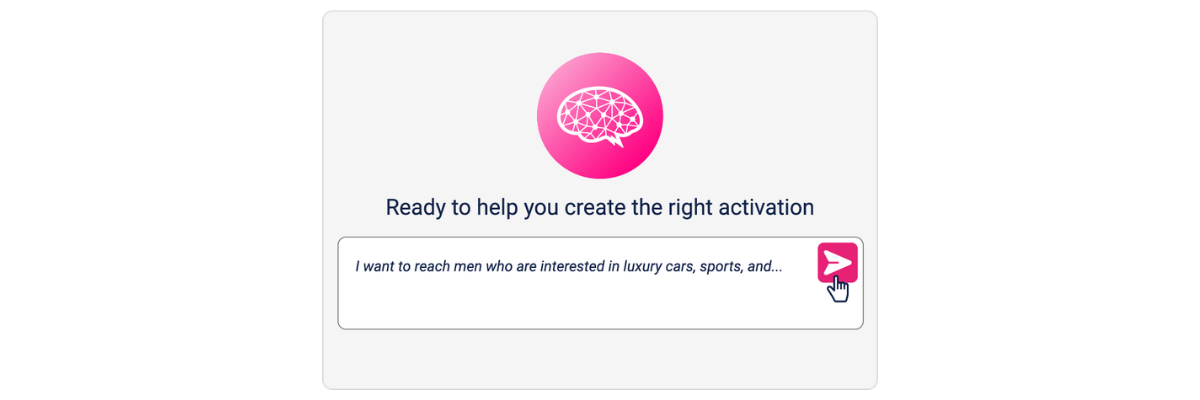
1. Input your audience
Describe your target audience in the chat using your own words, as if you were talking to a strategist.
2. Receive recommendations
Receive custom audience recommendations along with the total number of unique users in your audience.

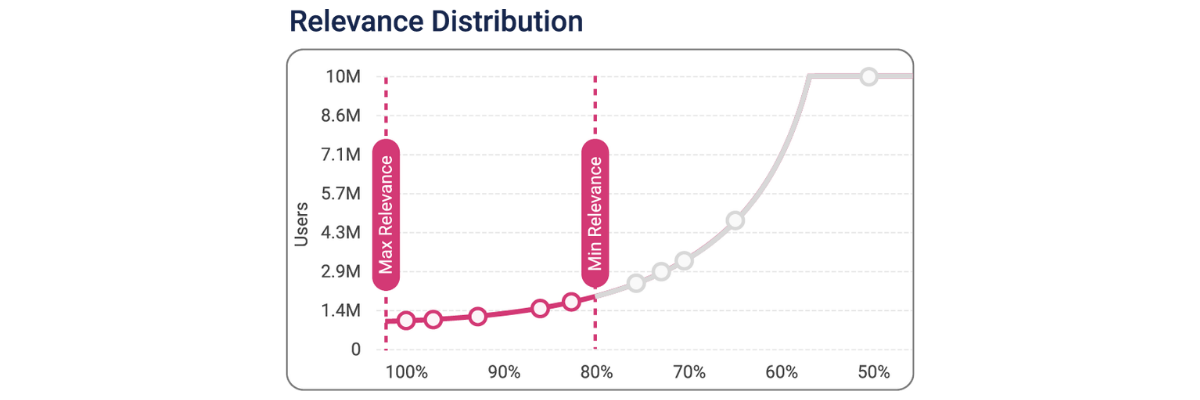
3. Adjust relevance
Tune the relevance distribution to increase or decrease audience size based on campaign needs.
4. Activate
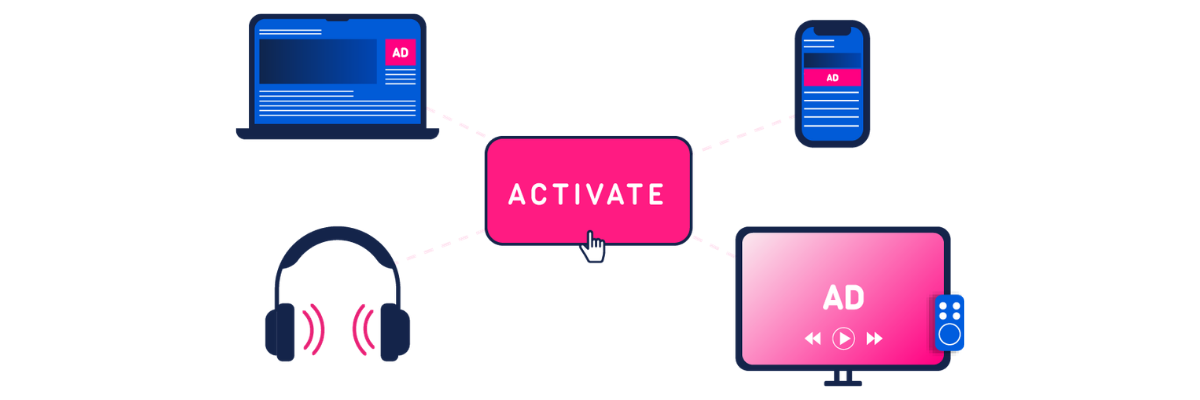
Confirm that the audience segment recommendations align with your target audience, then activate via any DSP in your chosen channel.
No first-party data required. No seed list. No waiting for a segment to refresh.
In campaign tests, top-scoring AudienceGPT audiences converted between 1.4x and 5.3x above baseline, and importantly, that baseline was not random internet users, but other active converters.
This was a test to see whether or not AudienceGPT could find the right buyers for a specific campaign; and the results show it can.
AudienceGPT Means The End of Static Audiences
For years, audiences were limited to what machines were capable of, not what marketers actually needed. That gap is now closed.
With AudienceGPT, advertisers can describe who they are looking for in their own words and get back an audience built just for them. An audience that reflects where consumers are right now versus where they were six months ago.
An audience is no longer a static list. It is a living hypothesis, one that evolves as consumers do.
AudienceGPT is built to bring you a hypothesis worth betting on.
—
Want to try AudienceGPT? Reach out to our team at cognitiv.ai or email sales@cognitiv.ai.


