


Summary: Like many of the world's most famous brands, NFL team names often have multiple meanings, and keyword-based contextual targeting cannot always tell them apart. In the spirit of football season, Cognitiv’s insights team ran an analysis that found, for some teams, most pages mentioning their name are not about football at all. ContextGPT™, Cognitiv's chat-based contextual targeting tool, solves this problem by using deep learning to interpret digital content with human-like nuance.
—
Ever since the Giants beat the undefeated Patriots in Super Bowl XLII (in 2008), thanks to arguably the most iconic catch in NFL history, I have been a die-hard Giants fan. So it is always a little annoying that every time I search for "Giants news," I get the latest on the San Francisco Giants…
For me, a minor inconvenience; I just add “New York” to my search. For an advertiser, though, the same keyword mix-up is an expensive mistake.
Why? Because every ad meant for New York football fans that lands on a San Francisco baseball page is budget spent on someone the campaign was never meant to reach.
It happens because many contextual tools decide what a page is about by scanning for keywords, and to those tools, "Giants" is just "Giants," whether they are scoring touchdowns, hitting home runs, or bellowing “fee-fi-fo-fum.”
This limitation extends beyond sports, too. From Apple to Amazon, some of the world’s biggest brands share their names with everyday words, so their campaigns risk the same mix-up.
Cognitiv built ContextGPT to mitigate that risk. Powered by our Deep Learning Advertising Platform, it understands what a page is really about—beyond keywords, understanding the sentiment of pages like a human would—before an ad ever runs there.
In the spirit of football season, our insights team set out to learn just how widespread this disconnect is, researching how NFL team names show up across the web, and what share of those pages are actually about football.
Join me as I break down their findings.
One Word, Many Meanings
Team names make for tricky keywords, since most of them belonged to something else long before they belonged to a football team.
Take "Browns." On any given page, it might mean Cleveland football, a hash brown recipe, the color brown, or someone whose last name is Brown.
“Jets” could point to New York football, private jet listings, jet engines, or Elton John's "Bennie and the Jets."
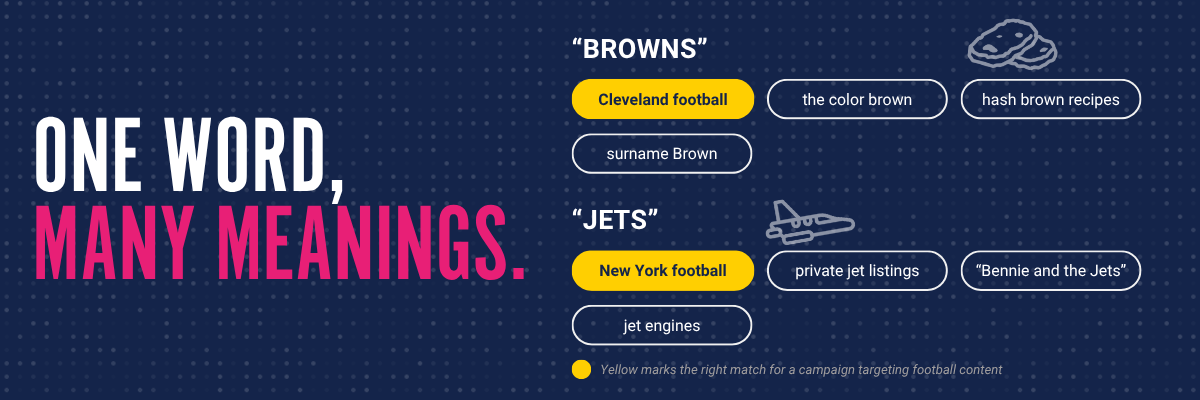
Antiquated contextual tools read keywords in a URL and stop there, so they have no way of telling a fourth-quarter comeback from a side of breakfast potatoes.
eMarketer's Contextual Advertising Trends 2026 report, with contributions from Cognitiv Chief Science Officer & Co-Founder Dr. Aaron Andalman and President Eric Danetz, describes the industry moving past that kind of word matching.
Some Names Have More Competition Than Others
When a URL mentions "Seahawks," 93% of the time it is about football, since little else goes by that name.
Reaching Rams fans takes more work. Only 17% of URLs that mention the Rams are about football; the other 83% cover Dodge trucks, puzzle sites, sheep, and entertainment.
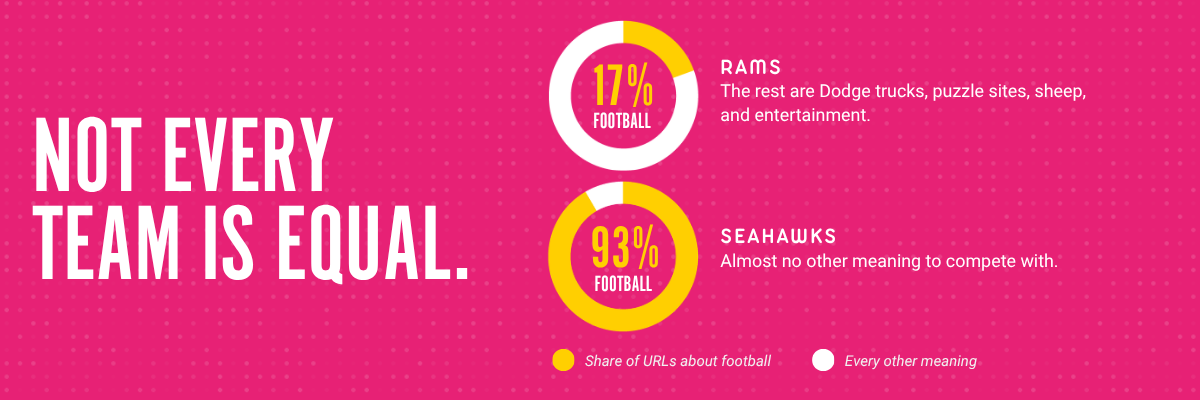
The same keyword strategy that works for reaching Seahawks fans can send most of a campaign targeting Rams fans to pages about trucks and puzzles.
eMarketer’s report also notes that keyword lists fail in both directions, blocking safe pages and letting unsuitable ones through; meaning a campaign can end up paying for impressions on pages that do not fit while missing the pages where its audience is organically.
The surrounding page shapes attention, too. Eye-tracking research cited in the report found that context accounts for at least a third of predicted attention to a display ad, so an ad on the right page is more likely to get noticed by the person it was meant for.
Content We Filter Out
Every 15 minutes, ContextGPT analyzes new URLs across the internet and keeps only the ones truly about football. Beyond keyword-restricted targeting, it reads each page and judges what the page is truly about.
A recap of Sunday’s game can qualify even if its URL never names a team, while a page with “ram” in its address gets filtered out because our technology knows it is really about selling a pickup truck.
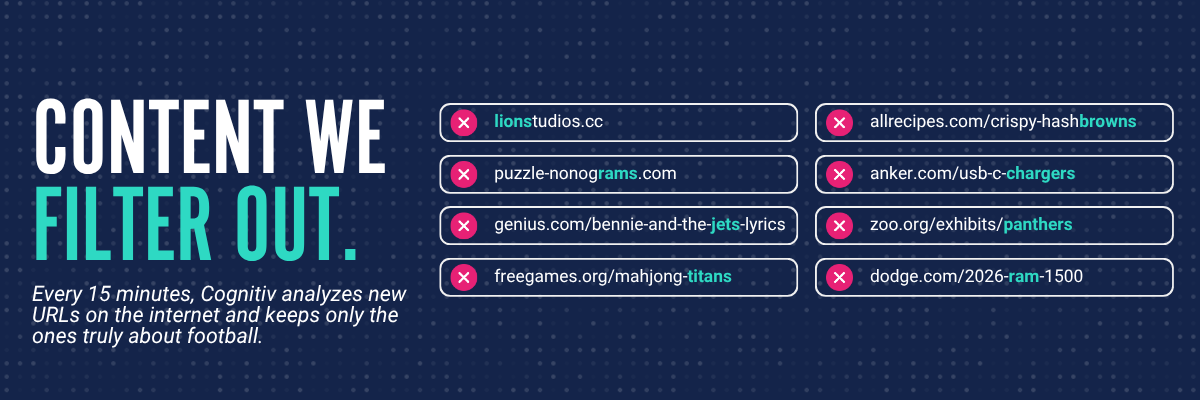
That 15-minute pace also matters because the web never stops publishing. A blockbuster trade can send a wave of new football pages online in a single afternoon, and so can a product launch or a viral review.
Whatever an advertiser sells, ContextGPT keeps its list of eligible pages as current as the conversation around it.
How ContextGPT Reads the Field
Planning with ContextGPT feels more like briefing a strategist than building a spreadsheet. A planner describes the audience in plain language, and ContextGPT recommends the online environments that fit, with its reasoning shown for every page it picks. No keyword lists, and no guessing which “Giants” a page means.
Suitability controls and made-for-advertising (MFA) avoidance come built in, and the latest upgrade made ad placement up to 40% more accurate, all without cookies, pixels, or user data.
Research cited in eMarketer's report shows that approach pays off. Half of advertising decision-makers in privacy-regulated industries rely on contextual as their main targeting tactic, and a University of Kansas study of more than 1,000 participants found that AI-driven contextual ads increased attention, perceived ad value, and purchase intent without collecting personal data.
Reaching the Right Fans
Since that night in 2008, I have watched plenty of football games end with the team I love falling short, so I know how it feels to invest in something that does not deliver. Advertisers should not have to feel that way about where their online ads run.
Request a ContextGPT demo to see how it finds the right fans for your brand, or read more about the next evolution of ContextGPT.


